The Ultimate Guide to Tutoring Jobs in India: Income, Eligibility, and Career Outlook
As the demand for personalized learning continues to skyrocket, tutoring has evolved from a part-time side hustle into a highly respected and lucrative profession in India. Whether you are a college student, a retired professional, or a subject matter expert, the Indian education market offers vast opportunities to share knowledge and earn a significant income.
In this guide, we explore everything you need to know about starting your journey as a tutor, from eligibility requirements to the potential pros and cons.
Eligibility Criteria for Tutors in India
The beauty of the tutoring industry in India is that it is accessible to many, provided you have a strong grasp of your subject. While there is no "central license" required, the following qualifications are generally expected:
-
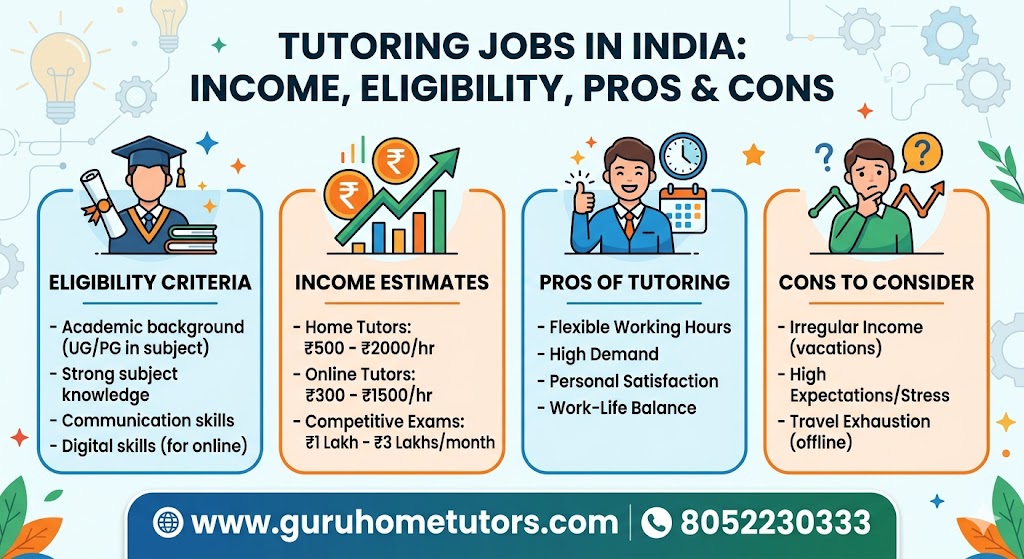
Academic Background: For K-12 tutoring, a high school diploma or an undergraduate degree in the relevant subject is standard. For competitive exams like JEE, NEET, or UPSC, tutors are often expected to have cleared those exams or hold advanced degrees (Masters/PhD).
-
Communication Skills: The ability to simplify complex concepts and communicate them clearly in English, Hindi, or regional languages is essential.
-
Technological Proficiency: If you are opting for online tutoring, you should be comfortable using digital tools like Zoom, Google Meet, and digital whiteboards.
-
Expected Income: How Much Can You Earn?
The income for tutors in India varies significantly based on experience, location, and the subjects taught.
-
Home Tutors: On average, home tutors charge anywhere from ₹500 to ₹2,000 per hour depending on the city and the complexity of the grade level.
-
Online Tutors: Platforms often pay between ₹300 and ₹1,500 per hour. Independent online tutors with a strong personal brand can charge much higher.
-
Competitive Exam Specialists: Tutors specializing in IIT-JEE, NEET, or CAT can earn upwards of ₹1 Lakh to ₹3 Lakhs per month if they work with premier coaching institutes or have a steady flow of private students.
-
Pros and Cons of a Tutoring Career:
The Pros:
-
Flexibility: You can choose your own working hours and the number of students you wish to take on.
-
High Demand: With the competitive nature of Indian education, there is never a shortage of students seeking extra help.
-
Rewarding: There is immense personal satisfaction in helping a student overcome academic hurdles and achieve their goals.
-
The Cons:
-
Irregular Income: Unless you are tied to an agency or school, income can fluctuate, especially during summer vacations or exam breaks.
-
Patience and Stress: Handling different student temperaments and the pressure of meeting parental expectations can be taxing.
-
Burnout: Traveling between homes for offline tutoring can be physically exhausting.
-
How to Find Tutoring Jobs
To get started, you can register on reputable tutoring bureaus, leverage social media platforms like LinkedIn and Facebook, or sign up with dedicated platforms like Guru Home Tutors to connect with students in your locality.
tutoring jobs in India, home tutor salary India, how to become a tutor in India, online tutoring jobs, part-time teaching jobs, Guru Home Tutors, teacher eligibility India, home tuition income.